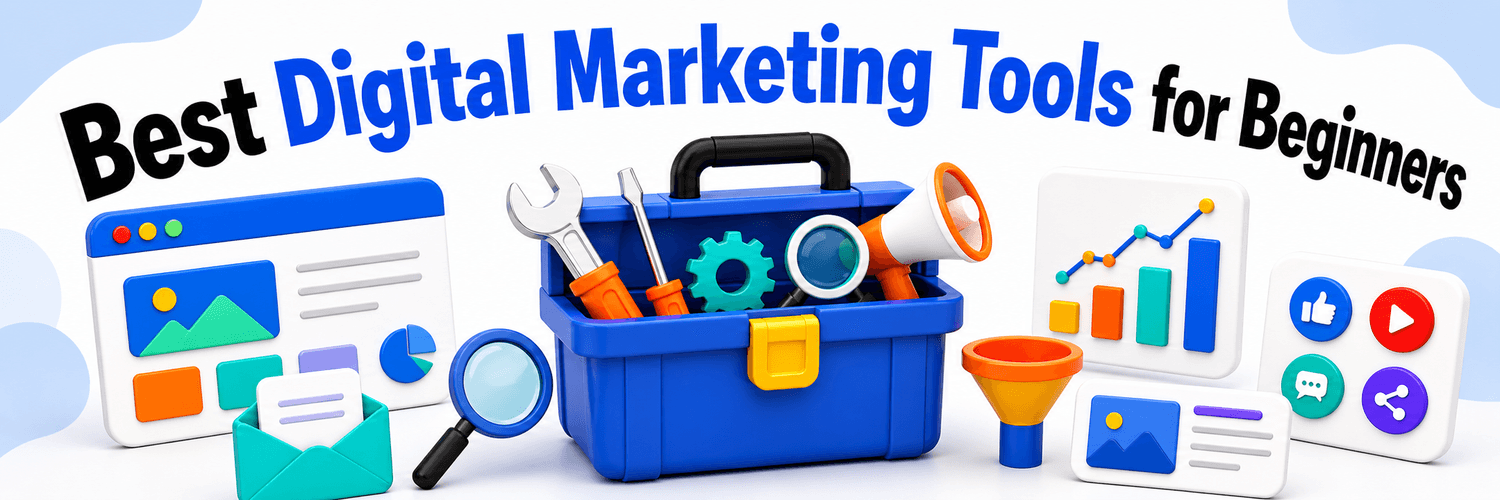
Best Digital Marketing Tools for Beginners
You do not need a complicated setup to start digital marketing. This guide explains the simple tools beginners can use to build a website, collect leads, create content, and follow up with people online.
Simple Tools Are Better for Beginners
One of the biggest mistakes beginners make is thinking they need every tool before they can start digital marketing. They see advanced software, automation systems, design tools, analytics dashboards, and paid ad platforms, then feel stuck before they even begin.
The truth is, beginners do not need a complicated setup. You only need a few simple tools that help you create content, send people to one clear place, collect leads, and follow up with them.
The goal is not to build the perfect system on day one. The goal is to start with the basics, learn how each tool works, and improve your setup as you grow.
1. Website or Landing Page
A website or landing page gives people one clear place to learn more about what you offer. This is important because social media alone is not enough. A post can disappear quickly, but a page gives your content and offer a home.
For beginners, a simple page is better than a complicated website. You need a clear headline, a short explanation of who you help, helpful information, and one main call-to-action.
Your website does not need to be perfect to be useful. It just needs to help visitors understand what you do and what step they should take next.
2. Email List
An email list helps you stay connected with people after they visit your page. This matters because most people will not take action the first time they see your website, article, or offer.
With email, you can follow up, share helpful tips, send beginner guides, and remind people about the next step. Instead of hoping they come back later, you have a way to keep the conversation going.
Beginners do not need anything fancy at first. Start with a simple form, a helpful reason for people to subscribe, and a few basic follow-up emails that teach, build trust, and guide people forward.
3. Content Creation Tools
Content creation tools help you make simple posts, graphics, videos, and guides that explain your message clearly. Your content does not need to be perfect, but it should be easy to understand and helpful for the person reading or watching it.
For beginners, tools like Canva, a basic video editor, and a simple writing tool can be enough to get started. The goal is to create content that answers questions, teaches something useful, or points people toward the next step.
Do not spend all your time making content look fancy. Focus on making it clear, helpful, and consistent. A simple post that solves a real problem is better than a perfect design that does not say anything useful.
4. Analytics and Tracking
Analytics help you understand what is working and what needs to improve. Without tracking, you are mostly guessing. You may not know which pages people visit, which content gets attention, or where visitors stop taking action.
Beginners do not need to become data experts. Start by watching simple numbers like page visits, clicks, email sign-ups, and which content brings people to your site. These numbers can help you make better decisions over time.
The goal of tracking is not to make things complicated. It is to help you see what people are responding to so you can keep improving your content and your online system.
5. A Clear Call-to-Action
A call-to-action tells visitors what to do next. This could be clicking a button, reading another guide, joining an email list, watching a training, or getting a beginner blueprint.
This is one of the most important parts of digital marketing because attention by itself is not enough. If people visit your page but do not know what to do next, most of them will leave without taking action.
For beginners, keep your call-to-action simple. Use clear button text like “Start Learning,” “Read the Guide,” or “Get the Beginner Blueprint.” Avoid giving people too many choices on one page. One clear next step usually works better than five confusing options.
What Beginners Should Avoid
Beginners should avoid signing up for every tool they see. More tools do not automatically mean more progress. In fact, too many tools can make digital marketing more confusing.
The better approach is to start simple. Use one page, one main call-to-action, one way to collect leads, and one main place to create content. Once that basic system makes sense, you can add more tools later.
A simple setup that you understand is better than a complicated setup that you never use.
Ready to Build With the Right Tools?
The right tools make digital marketing easier, but the tools only work when you have a clear plan. If you are ready to stop guessing and start building step by step, the next move is to follow a beginner-friendly blueprint that shows you what to do first.